
These medical sources investigate Large Retinal Capillary Aneurysms (LRCAs), also known as telangiectatic capillaries (TelCaps), which are abnormally large vascular dilations that occur in the eye. Research indicates that these lesions frequently develop in patients with retinal vein occlusion (RVO) or diabetic retinopathy, appearing as hyperreflective round structures on optical coherence tomography (OCT) imaging. While primary lesions occur in otherwise healthy eyes and often resist standard injections, secondary lesions linked to vascular diseases show better treatment outcomes despite being more likely to be bilateral or multifocal. Data suggests that disease recurrence significantly elevates the risk of forming these aneurysms, particularly in the years following the initial vascular event. Diagnostic accuracy is highest when using indocyanine green angiography (ICGA), which helps clinicians differentiate these structures from other retinal conditions. Ultimately, the studies advocate for extended monitoring and specialized laser therapy to manage the severe swelling and lipid deposition associated with these vascular anomalies.
The provided sources describe Primary Large Retinal Capillary Aneurysms (LRCAs), originally termed Perifoveal Exudative Vascular Anomalous Complex (PEVAC), as isolated, idiopathic vascular lesions occurring in otherwise healthy patients. Over time, the nomenclature has evolved from various descriptive terms to a unified classification aimed at improving diagnostic clarity.
Definition of Primary (Isolated/PEVAC) Lesions
- Original Description: PEVAC was first defined in 2011 as a unilateral, isolated perifoveal aneurysm found in patients without other retinal or choroidal vascular abnormalities.
- Primary LRCA Criteria: Under the newer nomenclature, a primary LRCA is defined as a large, isolated, perifoveal aneurysm (round or oval, more than 100 microns in diameter) appearing as a hyperreflective lesion on OCT with intraretinal cystic spaces, in the absence of other retinal vasculopathy like diabetic retinopathy (DR) or retinal vein occlusion (RVO).
- Clinical Presentation: These primary lesions are typically unilateral and unifocal. They are characterized by focal pericyte loss and endothelial cell damage rather than inflammation or ischemia.
Nomenclature and the Shift to “LRCA”
The sources highlight a significant shift toward standardizing the terminology for these lesions to resolve ambiguity.
- Standardization (The Delphi Consensus): A 2025 Delphi consensus study proposed “Large Retinal Capillary Aneurysm (LRCA)” as a unified term to replace inconsistent descriptors like PEVAC, PEVAC-like, and PEVAC-resembling lesions.
- Telangiectatic Capillaries (TelCaps): While “TelCaps” is a recent term used specifically for large capillary aneurysms developing in the setting of retinal vascular disease (secondary lesions), some literature has used it more broadly. In the context of the larger nomenclature debate, “TelCaps” or “secondary LRCA” is used when the aneurysm is associated with an underlying disorder like DR or RVO.
- PVAC vs. TelCaps: One source suggests a specific distinction where the term PVAC (Perifoveal Vascular Anomalous Complex) should be reserved for primary/idiopathic cases, while TelCaps applies to cases with an identified underlying retinal vascular disorder.
Key Diagnostic Features in Nomenclature
Regardless of whether they are primary or secondary, these lesions share a “signature” appearance on Optical Coherence Tomography (OCT) that defines them within the nomenclature:
- Size: A diameter of at least 100 microns (though some historical sources used 150 microns).
- Wall/Lumen: A characteristic hyperreflective wall surrounding a hyporeflective lumen.
- Flow: They typically show flow signals on OCT-angiography (OCTA), confirming they are perfused, although the flow may be slow enough to be poorly visualized in some segments.
In summary, while PEVAC was the foundational term for primary, isolated lesions, the medical community is moving toward the broader designation of Primary LRCA to categorize these aneurysms based on their distinct OCT morphology while acknowledging their idiopathic nature.
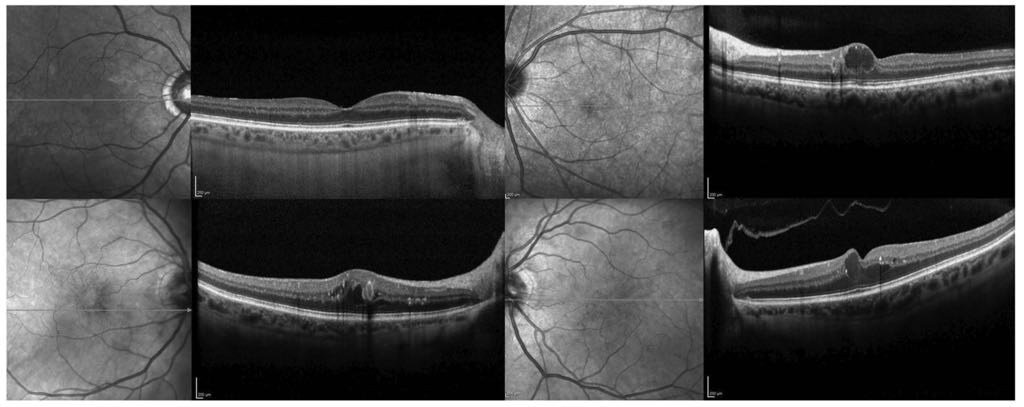
Optical coherence tomography scans of affected and fellow eyes from patients in the primary and secondary LRCA groups. In a case from the primary group, B-scan images show no pathology in the right eye, whereas the left eye demonstrates a round hyperreflective lesion, having a reflective wall surrounding a dark lumen, with intraretinal cyst and hard exudates with posterior shadowing (superior figures).
In a case with diabetic retinopathy from the secondary group, B-scan images reveal two round hyperreflective perifoveal aneurysmal lesions associated with small retinal hemorrhages in the right eye with intraretinal cystic spaces and hard exudates in both eyes (inferior figures).
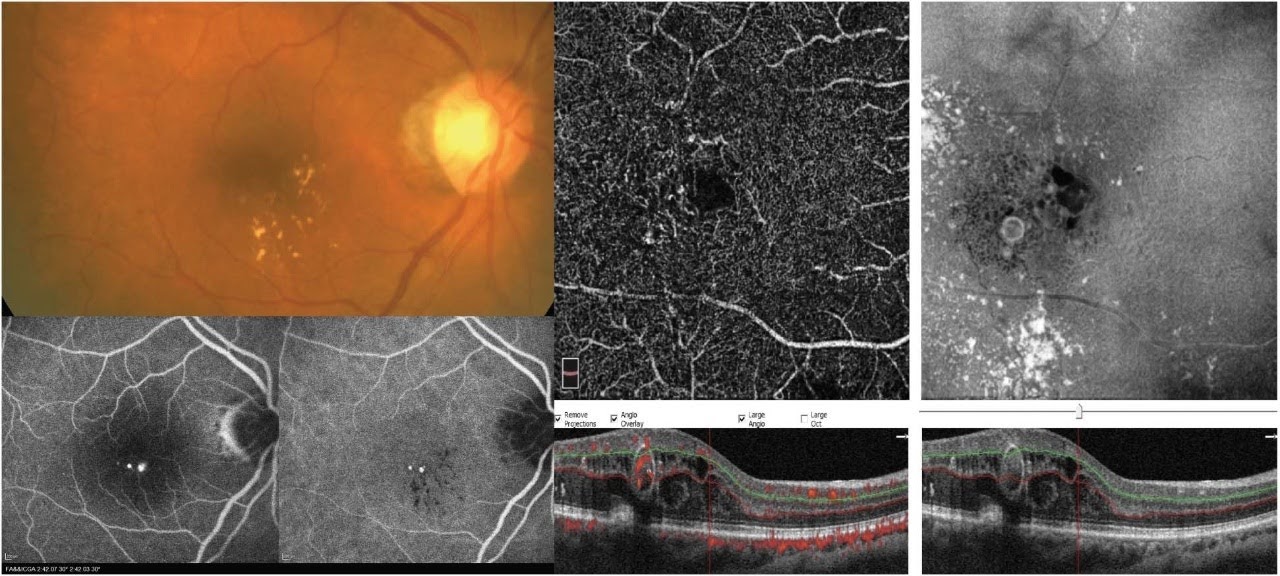
Multimodal imaging including color fundus photography, fundus fluorescein angiography, indocyanine green angiography, and optical coherence tomography angiography characteristics of a case with primary LRCA. The color fundus image shows two perifoveal aneurismal lesions with hard exudates. Fundus fluorescein angiography and indocyanine green angiography images clearly demonstrate two well-defined, round hyper-fluorescence suggesting perifoveal aneurysmal lesions with no leakage. These perifoveal aneurysmal lesions are well visualized on the deep capillary plexus slab of en-face optical coherence tomography angiography. The corresponding optical coherence tomography B-scan reveals flow that is present inside the aneurysmal lesion with intraretinal cystic spaces nearby.
In the context of detecting large capillary aneurysms—variously termed Telangiectatic Capillaries (TelCaps) or Large Retinal Capillary Aneurysms (LRCAs)—Indocyanine Green Angiography (ICGA) is consistently identified as the gold standard for identification. While other modalities provide critical structural and functional data, ICGA offers definitive confirmation of the lesion’s presence and characteristics.
Why ICGA is the Gold Standard
ICGA is considered superior for several technical and clinical reasons:
- Distinctive Staining: In the late phases of an angiogram (typically around 20 minutes), ICGA provides a clear, persistent visualization of the lesion. It shows intensive staining in both the parietal (wall) and luminal (inner space) components of the aneurysm.
- High Affinity: The indocyanine green dye has a high affinity for the lipids and proteins found in the wall and the intraluminal hydrophobic components of these aneurysms.
- Tissue Penetration: Due to its longer wavelength spectrum, ICGA is less affected by overlying hemorrhages than other imaging types, allowing for a more reliable diagnosis in complex cases.
- Guidance for Treatment: ICGA-guided laser photocoagulation is recognized as a primary strategy for managing these lesions, as it allows for precise targeting.
ICGA in the Context of Other Modalities
The sources emphasize that while ICGA is the benchmark, it is an invasive procedure that is not always available or necessary for initial screening. This has led to a reliance on a multimodal imaging approach:
- OCT B-Scans (Sensitivity: 94%): Structural OCT is highly effective for identifying the “signature” appearance of the lesion—a hyperreflective wall and hyporeflective lumen—and associated intraretinal fluid.
- Infrared Reflectance (IR): IR is an effective, non-invasive tool for detection and measurement. On IR, these lesions typically appear as hyporeflective circular structures, often containing a central hyperreflective dot. Measurements are often better reserved for IR because B-scans may miss the widest part of a lesion due to scan spacing.
- OCT Angiography (OCTA): OCTA often has low sensitivity (around 55%) for these lesions. The flow within the aneurysm is often too slow or stagnant to reach the sensitivity threshold of current OCTA technology, though some flow may be visible in the deep capillary plexus.
- Color Fundus Photography (CPF): This modality has the lowest sensitivity (39%). However, it can sometimes reveal a “hyphema sign” or “hematocrit sign”, where stagnant blood shows gravitational layering within the aneurysm lumen.
Current Clinical Strategy
Because ICGA is invasive, the sources suggest it should be used selectively. Clinicians often first suspect TelCaps/LRCAs based on non-invasive findings from OCT and IR images. ICGA is then employed to confirm the diagnosis when the findings are ambiguous or to guide surgical interventions like targeted laser therapy.
The sources indicate that anti-VEGF therapy yields a variable and often limited response in treating large capillary aneurysms, with effectiveness largely dependent on whether the lesion is primary (idiopathic) or secondary (associated with an underlying retinal vascular disease). While anti-VEGF is the cornerstone of managing conditions like diabetic macular edema (DME) and retinal vein occlusion (RVO), the presence of these aneurysms—whether termed LRCAs, TelCaps, or PEVAC—often signals a recalcitrant disease state that is resistant to standard injection protocols.
Variable Response Based on Classification
The response to anti-VEGF therapy differs significantly between primary and secondary lesions:
- Primary (Isolated/PEVAC) Lesions: These lesions typically show minimal to no response to anti-VEGF therapy. Clinical studies have observed no significant improvement in visual acuity (VA) or central macular thickness (CMT) following injections in primary cases.
- Secondary (DME/RVO) Lesions: Outcomes are generally more favorable in secondary lesions, though they remain inconsistent. While some eyes show improvement in VA and edema, many others experience persistent or recurrent fluid despite intensive treatment.
Limited Effectiveness and Lesion Size
The physical characteristics of the aneurysm play a major role in its responsiveness to treatment:
- Size-Dependent Success: Smaller aneurysms tend to respond more favorably to anti-VEGF agents, sometimes showing complete anatomical regression. Conversely, larger aneurysms (often defined as those >150 microns) are more likely to show an incomplete or transient response, displaying abnormal growth despite regular treatment.
- Anatomical vs. Functional Disconnect: Anti-VEGF injections can lead to a reduction in the size or number of the aneurysms, yet this remodeling often does not reflect on the final vision (VA) or central subfield thickness (CST), which may remain stable or even worsen over time.
Pathophysiological Reasons for Limited Response
The sources suggest that the limited efficacy of anti-VEGF is rooted in the unique underlying mechanisms of these lesions:
- Non-VEGF Pathways: The pathogenesis of these large aneurysms involves focal pericyte loss and mechanical endothelial damage rather than just VEGF-driven inflammation or ischemia.
- Focal vs. Diffuse Leakage: Research suggests that focal leakage associated with these aneurysms may not be entirely VEGF-dependent, explaining why standard anti-VEGF injections often fail to resolve the associated edema.
Injection Therapy Context: Anti-VEGF vs. Steroids
Because of the poor response to anti-VEGF monotherapy, clinicians often explore other injection options or combination strategies:
- Intravitreal Steroids: Steroids (e.g., dexamethasone or triamcinolone) have been used as an alternative for refractory cases. While some reports show success in “PEVAC-like” lesions, other long-term analyses found no significant difference in VA or CST outcomes compared to baseline.
- TelCaps as a Biomarker: The presence of these lesions is increasingly viewed as a biomarker for refractory disease. Recognizing them early allows for a reevaluation of the treatment approach, potentially moving toward targeted laser therapy to address the persistent edema that injections fail to clear.
In the landscape of injection therapy for large capillary aneurysms—specifically Telangiectatic Capillaries (TelCaps) or Large Retinal Capillary Aneurysms (LRCAs)—steroid implants like Dexamethasone and Triamcinolone are often employed as alternative or adjunctive treatments, particularly when lesions prove resistant to anti-VEGF therapy. The sources indicate that while these steroids may help manage associated macular edema, their effectiveness varies significantly depending on whether the lesion is primary or secondary.
Effectiveness in Primary vs. Secondary Lesions
The most critical finding regarding steroid therapy is the disparity in outcomes between lesion types:
- Primary (Isolated/PEVAC) Lesions: These lesions typically show a poor response to steroid implants. One study followed primary LRCA cases for an average of 16 months and found that neither dexamethasone implants nor anti-VEGF agents resulted in significant improvements in visual acuity (VA) or central macular thickness (CMT).
- Secondary (Retinopathy-Associated) Lesions: Conversely, secondary lesions (associated with diabetic retinopathy or retinal vein occlusion) often show significant improvement with steroid therapy. For instance, in eyes with secondary LRCAs, dexamethasone implants led to a measurable reduction in CMT and improvement in BCVA. This is likely because steroids address the underlying vascular disease rather than the focal aneurysm itself.
Steroids within the Injection Therapy Context
Steroids are frequently part of a “real-world” as-needed (PRN) approach where patients may receive multiple types of intravitreal agents.
- Refractory DME: Up to 40% of diabetic macular edema (DME) cases develop chronic persistent edema. When TelCaps are present, they are considered a biomarker for this refractory disease. While anti-VEGF is the first-line revolutionary management for DME, focal leakage from these large aneurysms may be VEGF-independent, prompting a switch to steroids.
- Mechanism of Action: It is hypothesized that steroids like Triamcinolone and Dexamethasone may work by maintaining cellular tight junction integrity, stimulating protein expression that inhibits oxidative stress-induced degradation, and decreasing overall vascular permeability.
- Clinical Observations: In one cohort where 28% of eyes received dexamethasone implants, researchers noted that even though the number and size of TelCaps might decrease over time (remodeling), the macular edema often persisted.
Specific Steroid Modalities
- Dexamethasone Implants: Used as a second-line therapy for anti-VEGF resistant cases. Some case reports suggest complete fluid resolution in “PEVAC-like” lesions (secondary cases), though researchers caution that this may be due to treating the underlying diabetic retinopathy.
- Triamcinolone: One case series of three patients showed favorable responses in “PEVAC-resembling” lesions when treated with intravitreal triamcinolone. However, other investigators reported minimal response when using triamcinolone for primary idiopathic PEVAC.
Ultimately, the sources suggest that while steroid implants are a vital component of the injection therapy toolkit, they may be better suited for managing the diffuse edema of secondary lesions rather than providing a definitive cure for the focal, primary aneurysms. In cases where injection therapy—including steroids—fails to resolve the edema, the sources frequently recommend a shift toward targeted laser photocoagulation.

Alterations in serial optical coherence tomography scans of a patient in the primary LRCA group from baseline to follow-up examinations after two intravitreal anti-VEGF and one dexamethasone implant injection. The baseline optical coherence tomography scan ex-hibits two round hyperreflective perifoveal aneurysmal lesions with intraretinal cystoid spaces. Neither intravitreal anti-VEGF nor dexamethasone implant re-sulted in any reduction in mac-ular thickness.
ICGA-guided focal photocoagulation is increasingly recognized as a preferred treatment strategy for managing large capillary aneurysms (TelCaps or LRCAs), particularly when they are associated with persistent, anti-VEGF-resistant macular edema. Because Indocyanine Green Angiography (ICGA) is the gold standard for detecting these lesions—providing intensive, persistent staining of both the aneurysm wall and lumen—it serves as the definitive map for targeted laser intervention.
Rationale and Efficacy
The sources highlight that while smaller microaneurysms may respond to anti-VEGF injections, large-size aneurysms often show an incomplete or transient response, necessitating adjunctive focal laser.
- Precision Targeting: ICGA is superior to other modalities like OCTA or fluorescein angiography for laser guidance because it is less affected by overlying hemorrhages and has a high affinity for the lipids and proteins within the aneurysm.
- Clinical Outcomes: Pilot studies have demonstrated that ICGA-guided targeted laser can successfully reduce the size of the lesions and lead to a gradual resolution of the adjacent macular edema.
- Biomarker for Treatment Shift: The presence of these lesions is often a biomarker for refractory disease; their detection via ICGA may signal a need to pivot from injection therapy to targeted laser.
The Context of Targeted Laser Modalities
While ICGA-guided laser is a powerful tool, its application within the “targeted laser” category involves several considerations regarding safety and technique:
- Conventional Thermal Laser: This is used to directly photocoagulate the leaking aneurysm. However, because these lesions are typically perifoveal, there is a significant risk of causing paracentral scotomas.
- Subthreshold Micropulse Laser: As a “nondamaging” alternative to conventional thermal laser, subthreshold micropulse therapy has shown promise for treating LRCAs without causing detectable damage to the retinal pigment epithelium or photoreceptors.
- Navigated Laser: Some study groups utilize ICGA-guided focal navigated laser systems to further improve the accuracy and safety of the delivery.
Ongoing Research and Consensus
There is a growing clinical consensus that ICGA-guided laser treatment may be the most appropriate strategy for these structures. To formalize this, the TalaDME trial—a multicentric, randomized controlled clinical trial—is currently investigating the efficacy of combining ICGA-guided laser photocoagulation with anti-VEGF therapy versus anti-VEGF monotherapy alone. This study aims to establish a more standardized treatment protocol for patients whose macular edema is driven by these specific focal vascular anomalies.
In the broader context of targeted laser therapy, the sources identify subthreshold micropulse laser (SML) as a promising, “nondamaging” alternative to conventional thermal photocoagulation for treating large capillary aneurysms (LRCAs/TelCaps).
Subthreshold Micropulse Laser (SML)
While traditional thermal laser therapy is an effective option, its use for these specific lesions is often limited because they are typically perifoveal; conventional laser carries a high risk of creating paracentral scotomas (blind spots) in the patient’s central vision.
- Nondamaging Nature: SML is considered a safer option because it provides therapeutic effects without causing detectable damage to the retinal pigment epithelium (RPE) or photoreceptors.
- Clinical Success: The sources highlight case evidence where SML was used successfully. For example, a case of primary LRCA (PEVAC) that had been previously unresponsive to intravitreal injections was successfully treated using multiple-session subthreshold micropulse laser therapy.
- Alternative to Injections: Because primary/isolated lesions often show minimal response to anti-VEGF and steroid injections, SML is viewed as a vital alternative pathway for reducing exudation and improving visual outcomes.
The Context of Targeted Laser Therapy
Targeted laser is increasingly viewed as a superior or necessary adjunctive strategy when lesions prove refractory to injection therapy. The sources describe various guidance methods for these targeted interventions:
- ICGA-Guided Laser: Many experts consider Indocyanine Green Angiography (ICGA) guidance the “gold standard” for laser treatment because it allows for precise localization of the aneurysm’s wall and lumen. A major multicentric clinical trial (TalaDME) is currently evaluating the efficacy of combining ICGA-guided laser with anti-VEGF therapy.
- Infrared (IR) and OCT Guidance: Other protocols utilize infrared reflectance or OCT B-scans to guide selective focal photocoagulation. These non-invasive modalities can help identify the active leaking site to ensure the laser is applied directly to the aneurysm.
- Refractory Disease: Targeted laser is specifically recommended for large-size aneurysms (e.g., those several hundred microns in diameter) that are likely to show an incomplete or only transient response to anti-VEGF monotherapy.
In summary, while targeted laser is the overarching strategy for managing persistent fluid associated with these aneurysms, subthreshold micropulse laser represents a specific technical refinement designed to deliver that treatment without the permanent structural damage associated with traditional laser methods.
The sources position targeted laser therapy as a critical alternative or adjunctive treatment for large capillary aneurysms—specifically Telangiectatic Capillaries (TelCaps) or Large Retinal Capillary Aneurysms (LRCAs)—that remain resistant to standard injection protocols. While Indocyanine Green Angiography (ICGA) is the gold standard for guiding these procedures, the sources emphasize the growing role of OCT and Infrared Reflectance (IR) as effective, non-invasive guidance modalities.
The Role of OCT/IR Guidance in Laser Therapy
Because ICGA is invasive and not always available, clinicians utilize structural OCT B-scans and IR imaging to localize and measure lesions for targeted treatment.
- Localization and Detection: IR imaging is particularly effective for identifying the “signature” appearance of these lesions—typically hyporeflective circular structures—and is recommended for accurate measurement. High-density OCT raster scans serve as a necessary adjunct to IR to confirm the lesion’s internal characteristics (the hyperreflective wall and hyporeflective lumen).
- Guidance for Photocoagulation: Researchers have successfully utilized IR images with corresponding OCT B-scans to both detect these aneurysms and monitor their subsequent response to laser therapy.
- Need for Precise Visualization: The sources highlight that because TelCaps are dynamic and often small, accurate upright visualization provided by these modalities is essential for successful targeting.
Targeted Laser in the Larger Treatment Context
Targeted laser therapy addresses the limitations of pharmacological injections, which often fail to resolve the focal leakage associated with these large aneurysms.
- Treatment of Focal Leakage: Unlike the diffuse leakage seen in standard diabetic macular edema (DME), the focal leakage from TelCaps/LRCAs may be VEGF-independent. Targeted laser photocoagulation has been shown to successfully reduce the size of these lesions and resolve the adjacent, recalcitrant macular edema.
- Thermal Focal Laser vs. Micropulse:
- Selective Focal Photocoagulation: Targeted thermal laser can lead to a gradual resolution of edema, but because these lesions are often perifoveal, it carries a risk of causing paracentral scotomas.
- Subthreshold Micropulse Laser: This is described as a “nondamaging” alternative that treats the aneurysm without causing detectable damage to the retinal pigment epithelium or photoreceptors. Case reports indicate success with this method in patients who were previously unresponsive to intravitreal injections.
- A Shift in Management: The discovery of these lesions during follow-up is considered a “biomarker” for refractory disease, necessitating a reevaluation of treatment plans. This often involves moving away from monotherapy injections toward a combination approach, such as the strategy being tested in the TalaDME trial, which compares targeted laser plus anti-VEGF against anti-VEGF alone.
In summary, the sources suggest that OCT/IR-guided targeted laser provides a safe and effective pathway for treating large capillary aneurysms, offering a focal solution to a problem that often does not respond to the more diffuse approach of intravitreal injections.
Large capillary aneurysms—referred to as Telangiectatic Capillaries (TelCaps) or Large Retinal Capillary Aneurysms (LRCAs)—are described in the sources as highly dynamic structures that undergo significant remodeling over time. This remodeling is characterized by measurable changes in both the number and the physical dimensions of the lesions, often occurring in direct response to treatment or as part of the natural progression of the underlying retinal disease.
Numerical Dynamics: Count and Turnover
The sources highlight a significant “turnover” in the number of lesions present in an eye over long-term follow-up.
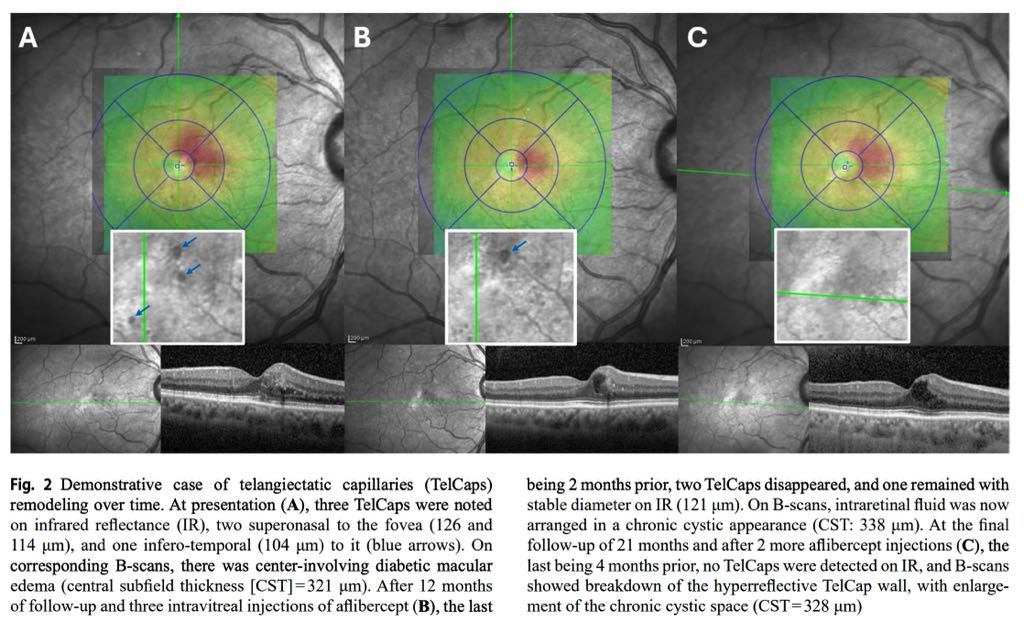
- Gradual Reduction: In a long-term study of eyes with diabetic macular edema (DME), the mean number of TelCaps per eye decreased significantly from 1.36 at baseline to 0.76 at the final follow-up (mean 44 months).
- Disappearance: TelCaps disappeared entirely in approximately 44% of eyes by the final visit. The lesions most likely to disappear were those that were significantly smaller at baseline (mean 149.8 µm) compared to those that persisted (mean 198.9 µm).
- Formation of New Lesions: Conversely, new TelCaps appeared in 12% of eyes during the follow-up period. This suggest that, similar to smaller microaneurysms, these large aneurysms are part of a continuous process of formation and regression.
Dimensional Dynamics: Size and Growth
The size of these aneurysms is also subject to substantial variation.
- Significant Size Reduction: Over long-term follow-up, the mean size of TelCaps was significantly reduced on both infrared (IR) and OCT imaging. On IR, the mean diameter dropped from 173.6 µmat baseline to 88.9 µmat the final visit.
- Abnormal Dimensional Growth: In the context of retinal vein occlusion (RVO), the sources note that while small aneurysms may regress completely, larger TelCaps often show only a transient response to anti-VEGF therapy and may exhibit abnormal dimensional growth in subsequent follow-up examinations despite regular treatment.
- Impact of RVO Type: The extent of dimensional variation is influenced by the subtype of RVO; lesions in central or hemispheric RVO are typically larger (mean 277 µm) than those in branch RVO (mean 196 µm), likely due to higher central venous pressure and subsequent backpressure in the capillary plexus.
Remodeling and Clinical Outcomes
The sources emphasize a distinct disconnect between the remodeling of the focal aneurysm and the overall health of the macula.
- Persistent Edema: Despite the significant reduction in the size and number of TelCaps, visual acuity (VA) and central subfield thickness (CST) often did not improve and sometimes worsened. In the DME cohort, 72% of eyes had stable or worse vision and 64% had increased CST at the final follow-up.
- Wall Breakdown: OCT B-scans of regressing lesions sometimes showed a breakdown of the hyperreflective wall, followed by the enlargement of adjacent chronic cystic spaces, suggesting that as the aneurysm regresses, the structural damage to the retina may persist.
- Biomarker for Refractory Disease: Because these lesions remodel but the surrounding edema often remains recalcitrant, the presence and dynamic behavior of TelCaps are considered biomarkers for chronic, treatment-resistant disease.
Drivers of Remodeling
The mechanisms behind these dynamics vary. In RVO, disease recurrence (new venous obstruction events) is a primary driver, with recurrence events associated with an 8.74-fold increase in the risk of TelCap development. In DME, the remodeling may be a result of intensive early injection therapy or the lesion’s natural history of turnover. Ultimately, because of their dynamic and often anti-VEGF-resistant nature, the sources suggest that these structures require targeted laser therapy for definitive management.
The sources describe telangiectatic capillaries (TelCaps) or large retinal capillary aneurysms (LRCAs) as dynamic structures that undergo significant remodeling over time,,,. A long-term study found that in nearly half of the cases (44% of eyes), these lesions completely disappeared or regressed by the final follow-up, which averaged 44 months,,.
The Nature of Remodeling and Regression
The regression of these lesions is part of a broader pattern of vascular change documented in the sources:
- Reduction in Size and Count: Beyond total disappearance, there is a statistically significant decrease in the mean number and mean size of these aneurysms over time when observed on both infrared (IR) and OCT imaging,,,.
- Predictors of Disappearance: The initial size of the lesion is a major predictor of its fate; aneurysms that eventually disappeared had a significantly smaller mean baseline diameter (~150 µm) compared to those that persisted (~199 µm),.
- Natural History vs. Therapy: While the regression often occurred following intensive anti-VEGF or steroid injection therapy (particularly in the first year), researchers note it remains unclear if this is a direct therapeutic response or part of the lesion’s natural history,.
- Turnover of Lesions: Similar to smaller microaneurysms, these large aneurysms exhibit a “turnover” where old lesions disappear and new ones form,. In one cohort, while 44% of eyes saw lesions disappear, new TelCaps appeared in 12% of the eyes during the same period,,.
The Regression Paradox
The sources highlight a significant clinical “paradox” regarding the remodeling of these structures:
- Persistent Edema: Despite the physical regression or disappearance of the aneurysms, the associated diabetic macular edema (DME) often remains recalcitrant,,.
- Stable or Worsening Vision: In the same eyes where the number and size of TelCaps decreased, the central subfield thickness (CST) and visual acuity (VA) often remained stable or even worsened,,,.
- Biomarker for Refractory Disease: This disconnect suggests that while the physical structure of the TelCap is dynamic, its presence (even if temporary) acts as a biomarker for chronic, persistent edema that does not necessarily resolve just because the focal aneurysm regresses,,,.
Dynamics in Different Pathologies
The dynamics of remodeling also appear to be influenced by the underlying vascular condition:
- Secondary to RVO: In patients with retinal vein occlusion (RVO), the development and growth of TelCaps are strongly linked to disease recurrence and increased venous obstruction,,,.
- Secondary to DR: Large-sized aneurysms in diabetic patients are more likely to show an incomplete or only transient response to anti-VEGF treatment compared to smaller lesions, which may show complete anatomical regression,.
- Primary Lesions: Primary (idiopathic) LRCAs are noted for being particularly resistant to regression following injection therapy, often maintaining stable size and persistent associated fluid despite multiple treatments,,.
In summary, while approximately 44% of these lesions may regress or disappear, they are part of a dynamic remodeling process where physical disappearance does not always equate to the resolution of the associated macular edema or functional visual improvement,,,.
The presence of Telangiectatic Capillaries (TelCaps) or Large Retinal Capillary Aneurysms (LRCAs) serves as a significant clinical biomarker for chronic and refractory macular edema. These lesions are identified as dynamic structures that undergo significant remodeling, yet this remodeling often does not lead to the resolution of the associated fluid, particularly in primary cases.
Markers for Chronic and Refractory Edema
The sources identify several imaging markers that signal a recalcitrant disease state where edema persists despite standard injection therapy:
- The TelCap/LRCA Lesion: Up to 40% of eyes with diabetic macular edema (DME) develop chronic persistent edema, and the presence of TelCaps is increasingly linked to these recalcitrant cases. These large aneurysms (≥100 µm) represent sites of major blood-retinal barrier rupture and focal leakage that may be VEGF-independent.
- Structural OCT Biomarkers: Beyond the aneurysm itself, other markers for recalcitrant DME include greater baseline central subfield thickness (CST), a high count of hyperreflective foci (HRF), disorganization of the retinal inner layers (DRIL), and the loss of ellipsoid zone (EZ) integrity.
- RVO Recurrence: In patients with retinal vein occlusion (RVO), the recurrence of the occlusive event—defined by new hemorrhages and worsening edema—is a powerful predictor of TelCap formation (hazard ratio of 8.74). This suggests that episodes of increased venous obstruction drive the development of these refractory lesions.
Dynamics and Remodeling of the Lesions
The sources describe these aneurysms as dynamic rather than static, characterized by continuous anatomical changes:
- Size and Count Reduction: Over long-term follow-up (mean 44 months), the mean number and size of TelCaps significantly decrease. In one study, lesions disappeared in 44% of eyes, while new ones appeared in 12%.
- Anatomic-Functional Disconnect: A critical finding is that while the aneurysms themselves may remodel—showing wall thickening, intraluminal material deposition, or even disappearance—the central macular thickness often remains stable or increases. This indicates that the reduction of the focal lesion does not necessarily resolve the chronic edema it helped initiate.
- Mechanism of Remodeling: In RVO, remodeling includes the development of intraretinal collaterals and hydrostatic pressure changes. TelCaps are considered “acquired de-endothelized capillary dilations” that remain perfused but become progressively ectatic due to persistent venous stasis and the deposition of plasma or cellular debris within the lumen.
Pathophysiological Context of Refractoriness
The refractory nature of the edema associated with these dynamic structures is rooted in their unique pathology:
- Primary (PEVAC) Resistance: Primary LRCAs/PEVAC lesions show no significant response to anti-VEGF or steroids, with no improvement in VA or CST over time.
- Non-Inflammatory Pathogenesis: Unlike standard edema, the formation of these lesions involves focal pericyte loss and mechanical endothelial damage rather than just inflammation or ischemia, which explains why anti-VEGF therapy, which targets VEGF-driven leakage, has limited efficacy.
- A Shift in Strategy: Because these dynamic markers signal a failure of pharmacological injections, the sources recommend a paradigm shift toward targeted laser therapy to address the focal leakage that injections cannot clear.

Tekin, Kemal, et al. “LARGE RETINAL CAPILLARY ANEURYSM: Clinical Features, Multimodal Imaging Characteristics, and Treatment Outcomes of Primary and Secondary Lesions.” Retina, vol. 46, no. 2, 1 Feb. 2026, pp. 351-60, doi:10.1097/IAE.0000000000004665.


Comments are closed