
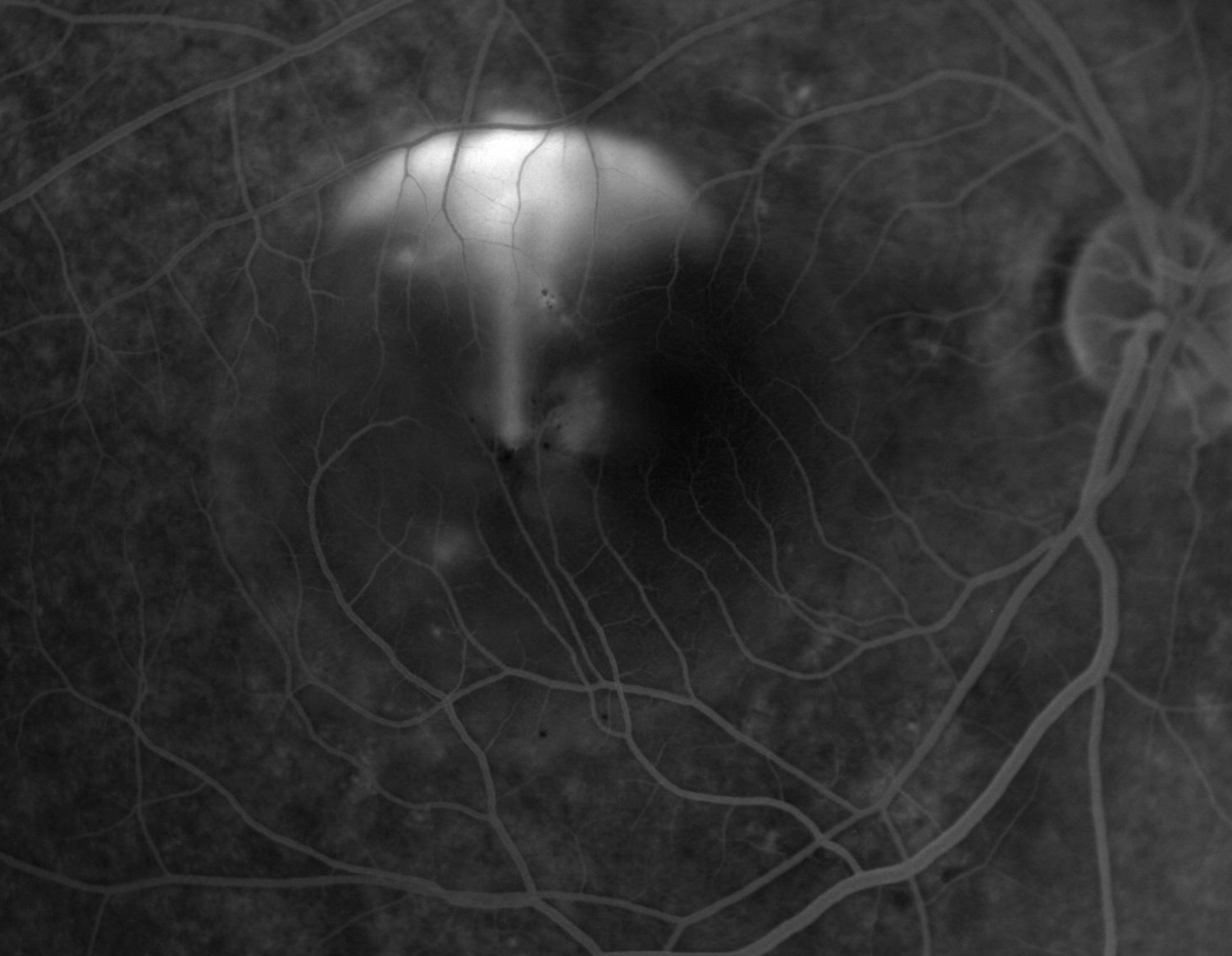
For decades, we’ve approached central serous chorioretinopathy (CSCR) through the lens of choroidal hyperpermeability, pachychoroid, and venous congestion. But what if a fundamental, routinely measured clinical parameter has been quietly shaping the disease all along?
A recent cross-sectional study in the American Journal of Ophthalmology turns a spotlight on intraocular pressure (IOP) and ocular perfusion pressure (OPP), revealing them not just as bystanders, but as potentially key players in CSCR pathogenesis.
Study Snapshot: IOP Emerges as a Strong Predictor
The study compared 80 CSCR patients with 80 age- and sex-matched controls. The findings were striking:
-
CSCR patients had significantly lower IOP (12.7 ± 1.8 mmHg vs. 16.1 ± 1.6 mmHg, p<0.0001).
-
They also had higher blood pressure and, consequently, significantly higher OPP across all measures (MOPP, SOPP, DOPP).
-
Anterior scleral thickness (AST) was greater in CSCR eyes, confirming prior pachychoroid disease associations.
But the real surprise came from the predictive analysis. IOP was the single strongest discriminator between CSCR patients and healthy individuals, outperforming both OPP and scleral thickness.
-
ROC AUC for IOP: 0.914 (Excellent)
-
ROC AUC for MOPP: 0.813 (Good)
-
ROC AUC for AST: 0.737 (Fair)
The optimal IOP cut-off for predicting CSCR was ≤14 mmHg.
Why Low IOP Matters: A Pathophysiological Model
The authors propose a compelling dual-mechanism model:
-
The Hemodynamic Pathway (via OPP): OPP is calculated as: MOPP = ⅔(MAP) – IOP. Low IOP directly increases OPP. In a choroid with defective autoregulation (a known defect in CSCR), this elevated perfusion pressure can lead to choroidal overperfusion, hyperpermeability, and exudation—effectively realizing Gass’s original “overperfusion” hypothesis.
-
The Hydrostatic/Mechanical Pathway: IOP is the hydrostatic pressure in the subretinal space. Low IOP reduces the pressure gradient that drives interstitial fluid out of the choroid and across the sclera. This impaired clearance, especially when combined with a thicker sclera (increased diffusion path length per Darcy’s Law), favors fluid accumulation. When a focal RPE defect occurs, the subretinal space becomes the path of least resistance for this fluid.
Clinical Implications for the Vitreoretinal Surgeon
-
Think Beyond the Choroid: When evaluating a CSCR patient, consider their IOP and systemic blood pressure as part of the hemodynamic profile. A patient with chronically low-normal IOP and borderline hypertension may be in a persistent high-risk state.
-
A New Therapeutic Angle? The study suggests that modulating IOP could be a novel treatment strategy. It cautiously references older reports of subretinal fluid resolution following IOP elevation from topical steroids. While carbonic anhydrase inhibitors (which lower IOP) have been tried with mixed results, this new paradigm asks: should we explore raising IOP in select cases? This is a provocative concept requiring rigorous future study.
-
Subgroup Identification: The study identified two distinct subgroups: one dominated by low IOP (≤14 mmHg) and another by high AST (>454.5 µm), with no overlap. These may represent different phenotypic pathways to a similar clinical endpoint.
-
The Glaucoma Parallel: The authors draw a fascinating inverse parallel with open-angle glaucoma (OAG), where high IOP and low OPP are risks. CSCR appears to exist in an opposing “disease domain”: low IOP, high OPP, thick choroid, and thick sclera vs. high IOP, low OPP, thin choroid, and thin sclera in OAG. This clarifies why the two conditions are rarely comorbid.

Limitations & The Road Ahead
The study is cross-sectional, so causality cannot be proven. IOP measurement did not control for corneal thickness, and steroid-induced CSCR cases were excluded. The intriguing therapeutic implications—especially regarding intentional IOP modulation—are hypothesis-generating and must be tested in prospective trials.
The Bottom Line
This research elevates IOP from a routine vital sign to a central piece in the CSCR puzzle. It integrates choroidal hemodynamics and scleral anatomy into a more complete pathophysiological model. For the vitreoretinal specialist, it adds a new layer to patient assessment and opens a novel, mechanistically grounded avenue for future therapeutic innovation.
Test Your Knowledge: IOP & OPP in CSCR
Check your understanding of the key findings from the recent study on intraocular pressure in Central Serous Chorioretinopathy. Select your answer for each question below.
Note: Once you select an answer for a question, you cannot change it.
1. According to the study, what was the single strongest predictor for distinguishing CSCR patients from healthy controls?
Correct Answer: C) Low intraocular pressure (IOP)
ROC curve analysis showed IOP had the highest Area Under the Curve (AUC = 0.914), significantly outperforming MOPP (AUC=0.813) and AST (AUC=0.737) as a discriminator for CSCR. The optimal cut-off was IOP ≤14 mmHg.
2. Which pathophysiological mechanism is NOT proposed by the authors to explain how low IOP contributes to CSCR?
Correct Answer: B) Causing direct toxicity to the retinal pigment epithelium (RPE)
The authors proposed two main pathways: 1) Hemodynamic (low IOP increases OPP, leading to choroidal overperfusion) and 2) Hydrostatic/Mechanical (low IOP reduces the pressure gradient for fluid clearance across the sclera, favoring exudation through an RPE break). Direct RPE toxicity was not suggested.
3. The study identified two distinct CSCR subgroups based on ROC cut-offs. What were they?
Correct Answer: B) Low IOP (≤14 mmHg) vs. High AST (>454.5 µm)
Using the optimal predictive cut-offs, the researchers found two subgroups where one factor dominated: a “Low IOP” group (13 eyes) and a “High AST” group (12 eyes). There was no overlap between these groups, suggesting different phenotypic pathways.
4. What inverse clinical parallel does the study draw between CSCR and Open-Angle Glaucoma (OAG)?
Correct Answer: B) CSCR is linked to low IOP, high OPP, and thick choroid/sclera, while OAG is linked to high IOP, low OPP, and thin choroid/sclera.
The authors propose that CSCR and OAG exist in opposing “disease domains” with inverse risk factor profiles. This explains the clinical observation that the two conditions are rarely associated in the same patient.
5. What was a proposed but cautiously noted potential future therapeutic strategy for CSCR based on the study’s findings?
Correct Answer: B) Exploring the therapeutic elevation of IOP in select cases.
Given that low IOP is a strong risk factor, the authors hypothesize that selectively raising IOP could be a novel treatment approach. They reference older reports of subretinal fluid resolution after IOP elevation from topical steroids. This concept requires prospective study.


My score was 5/5
👏
Important sentences
IOP was the single strongest discriminator between CSCR patients and healthy individuals
👌
CSCR patient, check the IOP
Check IOP in all Patients 😀.
low IOP is a strong risk factor for CSCR
We dont have strong evidence about that. But in future studies maybe, scientists find associations in this regard.