Vision on the Brink: How Swept-Source OCTA Uncovered Choroidal Infarcts in HELLP Syndrome
🧠 Clinical Background
HELLP syndrome (Hemolysis, Elevated Liver enzymes, Low Platelets) is a severe complication of pregnancy, often associated with preeclampsia and eclampsia.
Ophthalmic manifestations include serous retinal detachments, retinal hemorrhages, cotton-wool spots, and choroidal ischemia.
👁️ Case Presentation
Patient: 36-year-old pregnant woman at 26 weeks gestation.
Symptoms: Bilateral blurry vision, abdominal pain, petechiae, and severe hypertension (BP 200/130 mmHg).
Initial Fundus Exam: Subretinal fluid and Elschnig spots in the right eye.
OCT Findings: Outer retinal disruption, hyperreflective deposits on Bruch’s membrane, thickened choroid.
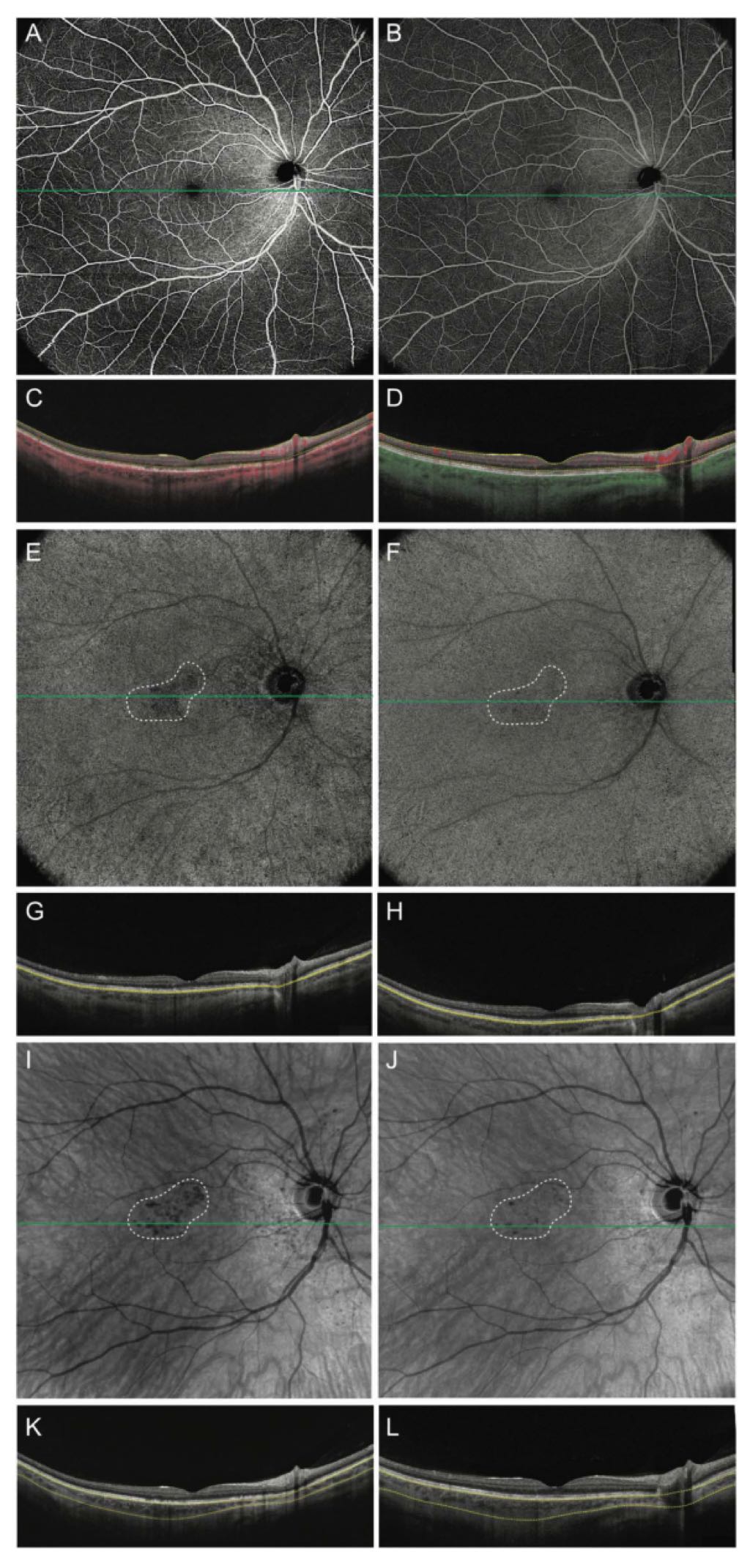
Wide-field SS-OCTA:
Revealed choroidal flow voids (subfoveal and peripapillary), consistent with choroidal infarction.
Retinal vasculature remained normally perfused.
Follow-up (6 months):
Visual acuity improved.
OCTA showed partial resolution of choroidal flow voids.
Infrared imaging revealed coalescing RPE changes.
🔬 Pathophysiological Insights
Choroidal vessels lack autoregulation, making them vulnerable to ischemia during hypertensive crises.
sFlt-1, a soluble VEGF receptor released during pregnancy, may contribute to endothelial dysfunction.
Choroidal infarcts can lead to RPE dysfunction and serous retinal detachments due to breakdown of the outer blood-retinal barrier.
🧪 Imaging Modality Significance
Wide-field SS-OCTA offers a noninvasive, high-resolution alternative to dye-based angiography.
Especially valuable in pregnant or breastfeeding patients where fluorescein or indocyanine green angiography may be contraindicated.
📝 Conclusion
HELLP syndrome can cause localized choroidal infarction detectable via SS-OCTA.
This imaging modality is crucial for diagnosing and monitoring retinal and choroidal vascular complications in pregnancy-related hypertensive disorders.
📸 Figure 1: Multimodal Imaging of Perifoveal Placoid Lesion
Panels A & B: Color fundus photographs show a polygonal placoid lesion with hyperpigmentation and Elschnig spots near the optic nerve.
Panel C: OCT reveals ellipsoid zone disruption and subretinal hyperreflective deposits.
Panel D: Infrared imaging highlights the hyperreflective placoid lesion.
Panels E & F: Follow-up OCT and infrared images show improvement—condensation of hyperreflective material into discrete deposits and partial resolution of the lesion.
When you login first time using a Social Login button, we collect your account public profile information shared by Social Login provider, based on your privacy settings. We also get your email address to automatically create an account for you in our website. Once your account is created, you'll be logged-in to this account.
DisagreeAgree
Connect with
I allow to create an account
When you login first time using a Social Login button, we collect your account public profile information shared by Social Login provider, based on your privacy settings. We also get your email address to automatically create an account for you in our website. Once your account is created, you'll be logged-in to this account.