-
Definition and Epidemiology:
-
Retinopathy of Prematurity (ROP) is a multifactorial retinal vascular disorder affecting preterm infants, previously known as retrolental fibroplasia.
-
Incidence in the US increased from 14.70% to 19.88% between 2000 and 2012.
-
Globally, ROP causes ~50,000 cases of blindness in children annually.
-
Higher prevalence in male infants due to pathophysiological fragility and screening criteria.
-
-
Pathophysiology:
-
Two phases of ROP:
-
Vasoobliterative (ischemic) phase (<32 weeks gestation): Decreased VEGF and IGF-1 lead to vasoconstriction and arrested vessel growth.
-
Vasoproliferative phase (>32 weeks gestation): Hypoxia induces increased VEGF, IGF-1, and neovascularization, potentially causing retinal detachment.
-
-
Sequelae include inflammation, hemorrhage, fibrous bands, macular dragging, and blindness.
-
-
Screening Guidelines:
-
Systematic screening is critical to identify at-risk infants and those requiring treatment, with sensitivity up to 100% using specific methods.
-
International Classification of Retinopathy of Prematurity (ICROP) (updated 2021):
-
5 stages: Demarcation line (1), elevated ridge (2), vascularized ridge (3), partial retinal detachment (4), complete retinal detachment (5).
-
3 zones: Zone I (most posterior), Zone II, Zone III (peripheral).
-
Plus disease: Tortuosity and dilatation of retinal arteries; preplus indicates milder changes.
-
Aggressive ROP (AROP): Can occur in larger preterm infants and extend beyond posterior retina.
-
-
Type I ROP (treatment threshold): Zone I, any stage with plus disease; Zone I, stage 3 without plus disease; Zone II, stage 2 or 3 with plus disease.
-
-
Diagnosis:
-
Binocular indirect ophthalmoscopy remains the gold standard.
-
Emerging tools include artificial intelligence (AI) (e.g., convolutional neural networks) to reduce interobserver variability in diagnosing preplus/plus disease.
-
Telemedicine (e.g., SUNDROP program) uses portable wide-field fundus cameras (130-degree) for remote screening, with sensitivity up to 100% and specificity up to 99.8%.
-
Predictive biomarkers (metabolites, cytokines, noncoding RNAs, gut microbiota) are under investigation for earlier diagnosis.
-
-
Treatment Options:
-
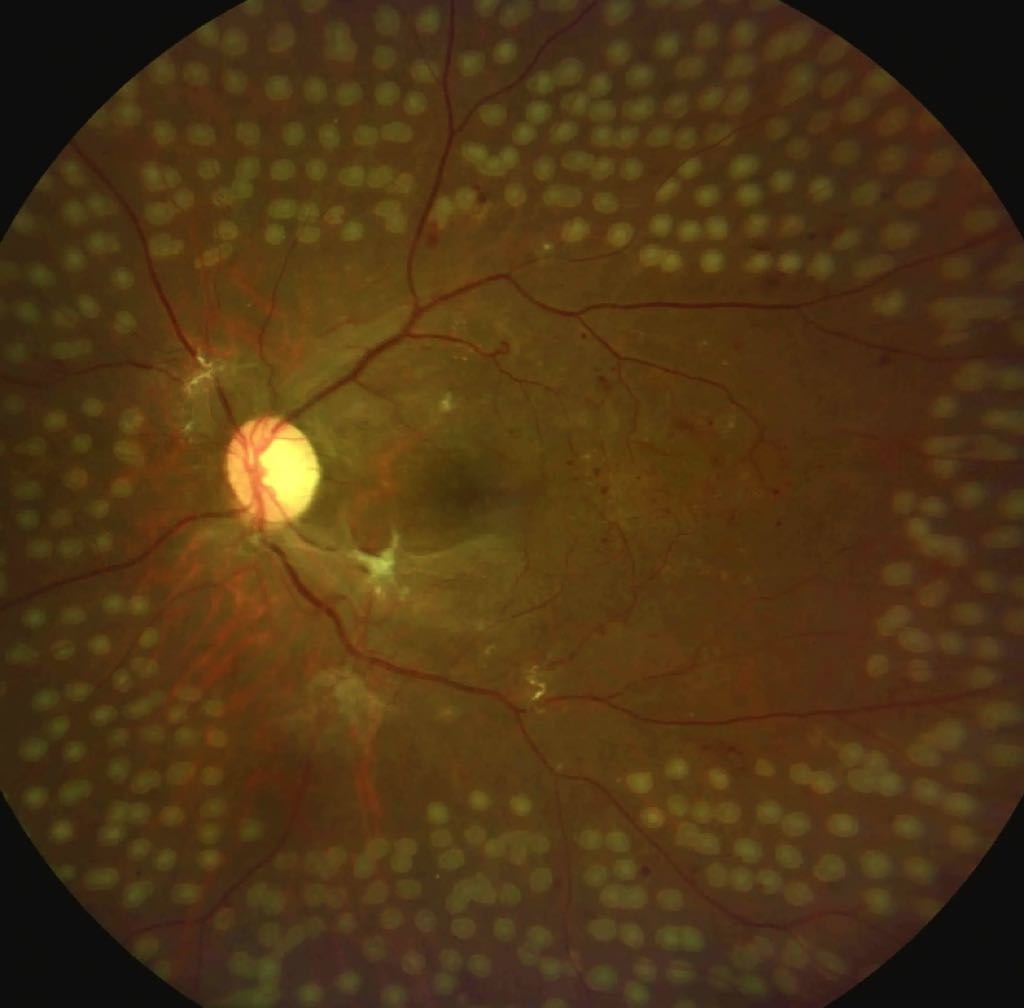
Laser Photocoagulation:
-
Primary treatment for proliferative ROP, reducing hypoxia by ablating peripheral avascular retina.
-
Advantages over cryotherapy: Less pain, inflammation, and refractive errors (myopia, astigmatism, hyperopia).
-
Adverse effects: Corneal edema, intraocular hemorrhage, cataract, ocular ischemia, limited visual field.
-
-
Cryotherapy:
-
Historical treatment; reduced progression to retinal detachment by 50% but is time-consuming and proinflammatory.
-
-
Intravitreal Anti-VEGF Injections:
-
Agents: Bevacizumab (Avastin), Ranibizumab (Lucentis), Aflibercept (Eylea).
-
Bevacizumab (BEAT-ROP trial): 0.625 mg effective for Zone I ROP, lower retreatment rates, reduced myopia (1.7% vs. 36.4% with laser).
-
Ranibizumab (RAINBOW trial): 0.2 mg potentially superior to laser; does not decrease systemic VEGF levels.
-
Aflibercept (FIREFLEYE trial): 85% success rate.
-
Dosage concerns: Lower doses (e.g., 0.031 mg bevacizumab) effective but may increase retreatment rates; systemic VEGF suppression may affect neurodevelopment.
-
Anti-VEGF promotes normal intraretinal vascularization, unlike laser’s destructive approach.
-
-
Surgery:
-
Indicated for stages 4A, 4B, and 5 ROP.
-
Lens-sparing vitrectomy preferred over lensectomy to reduce complications like aphakia; success rates 84–100% for stage 4A, 14.3–45.5% for stage 5.
-
Anti-VEGF can be used pre-surgery to reduce vascularization.
-
-
-
Prevention and Future Directions:
-
Prophylactic measures: Minimize prolonged ventilation and uncontrolled oxygen supplementation.
-
Supplemental oxygen: Higher saturation (96–99%) in the vasoproliferative phase may reduce progression (STOP-ROP trial).
-
Pharmacological interventions:
-
Propranolol: Beta-blocker suppressing VEGF; under investigation for prethreshold ROP.
-
Antioxidants (e.g., D-Penicillamine): Limited evidence for VEGF suppression.
-
Vitamin A: Trend toward lower ROP incidence; no established guidelines.
-
Vitamin E: Inconsistent results; use discontinued due to morbidity risks.
-
Omega-3 fatty acids: Fish oil reduced ROP severity; lacks large-scale trials.
-
COX inhibitors (e.g., ketorolac): Mixed results in preventing threshold ROP.
-
-
-
Global Disparities:
-
High-income countries favor anti-VEGF as initial treatment; middle-income countries prefer laser for recurrent ROP.
-
Developing countries face gaps in screening and treatment due to resource limitations, contributing to an “epidemic” of ROP-related blindness.
-
Citation
Chaaya C, Hoyek S, Patel NA. Update on Management of Retinopathy of Prematurity: A Review. Int Ophthalmol Clin. 2025;65(1):81-90. doi:10.1097/IIO.0000000000000552